Internal document
This is the working architecture, not the client presentation. It contains the two-destinies split, the decentering of Jim from hero to catalyst, Benjamin's money self-indictment, and the state-copy strategy.
Do not send this to Jim. Gate 3 is his buy-in on the Legacy decentering him, and it is not closed. The client-facing page is a separate document.
The note
What this film is.
Jim is a co-protagonist. Nothing here exists without him. Six visits across years. He kept showing up to ask whether a new line could be opened until the park service flew it. He protected the GPS points, then gave them away. An explorer sharing what he built and empowering the people who will keep it. The film opens and closes in his voice.
The telling is shared with the guides and locals, in their own words, and a large share of the story is carried from their perspective.
The narration runs on a three-plan ladder. Jim and his family are in all three. The chorus of guides and locals is in all three. Only the connective tissue changes. One guardrail is absolute: every voice must have been there.
The two voices converge at the naming. It stops being a load-bearing surprise and becomes the meeting point of a want and a keeping. The naming is still the keystone. The arch is standing before it drops in.
Stein
The film in one sentence
On the empty western side of a suffering mountain, an American funds and a Chagga crew open a new way up, and hand it to the mountain's own people to name and to keep, while the 11,700-year-old summit ice disappears in a single climbing lifetime.
The north star
A stranger should remember two things before the credits roll: a man who spent six years opening a door on the empty side of a mountain, and the guides and locals who named it and kept it. Both halves, or the film has failed.
Two truth-locks ride on that sentence. The glacier is a clock, never a cause: Kilimanjaro's water tower is the montane forest and rainfall, not the summit ice, and a hydrologist dismantles the causal claim in one line. And the film's own voice never says the route was authored from nothing. That claim lives only inside Benjamin's attributed quote, so it survives a worst-case recce.
Tagline · Someone had to want it. Someone had to open it. Everyone gets to keep it.
How it is built
The four things that make the film work.
v3 did not remove the single point of failure. It moved it, from the naming to the September cast.
01 · The two-clock edit grammar
Turns the film into a race. A stranger does not watch a rich man climb a mountain for nine days. He watches the ice lose, a man win, and hears a Tanzanian tell it.
02 · The chromatic debt
Promises one red frame in silence and withholds it for nineteen minutes. The thesis is legible in hue before a word of argument.
03 · The callback ledger
Sixteen setups that detonate invisibly. The film reads as craft, not travelogue.
04 · The narration ladder
Three plans, A to C. Jim and his family are in all three. The chorus of guides and locals is in all three. Only the connective tissue changes, so no casting outcome can take the film below its floor.
The grade table.
Every resilience claim resolves here. Stated once.
| Scenario | Grade | What carries it |
|---|---|---|
| Cast holds, naming is real | 9 to 11 | Everything, crowned by the naming |
| Cast holds, ceremony fails | 8 | All four members. The arch stands without the keystone |
| No local VO castable (Plan B) | 8 | Jim's spine, the guides' own on-camera words, all four members |
| No voiceover at all (Plan C) | 6.5 to 7 | Verite, interview, color, three history cards, the two-clock grammar |
| Legacy held, Keepsake ships | 5 | The contract, honored |
All four members survive a narration downgrade, because the ladder absorbs it. The naming is the crown, not the wall.
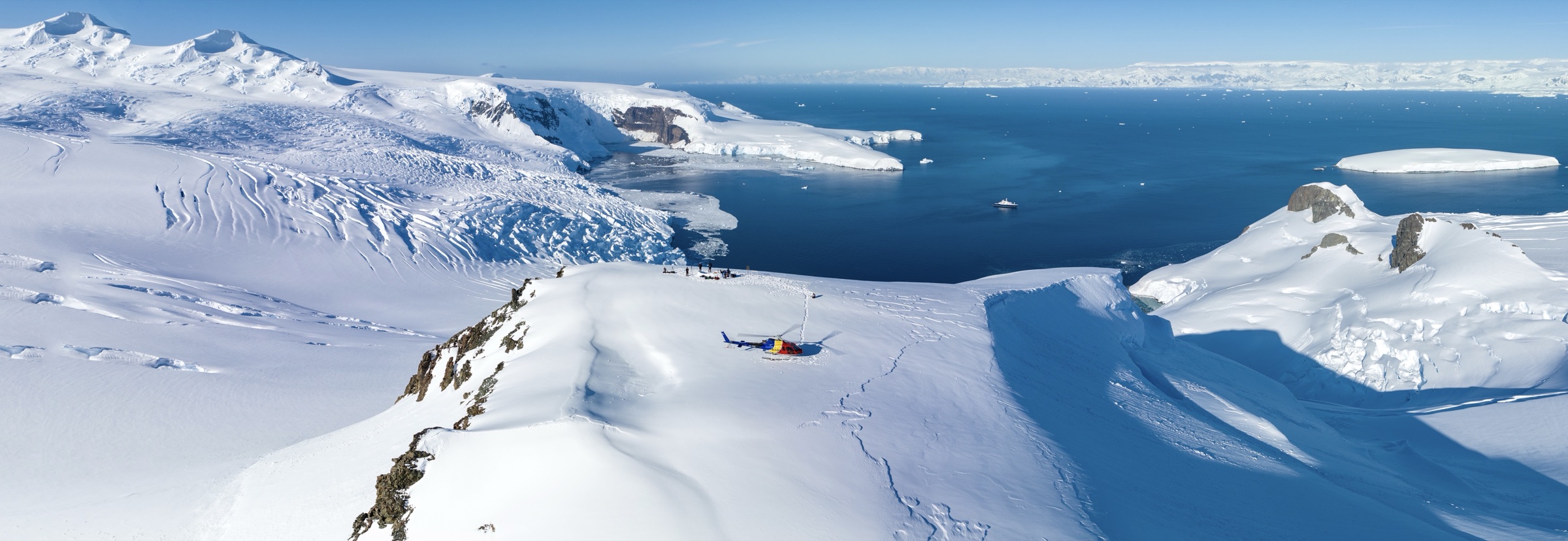
Tonal proxy · Antarctica, Stein Studios archive. Real photography only. Northern Icefield plates arrive in September.
Structure
The two clocks: the melting glacier and the new route.
The film is not a trip diary. It is a race, and the edit grammar is the race. The cut jumps by clock, not by calendar.
The death-clock · slow, unstoppable, colorless
The glacier. The Northern Icefield, an 11,700-year archive, roughly 1 km² today, more than 90 percent gone since 1912, surface lowering at least 17m since 1962. It cannot be stopped. It ticks under the whole film.
The birth-clock · fast, winnable, the only warm thing
The route becoming infrastructure and a man becoming a guide. John from camp manager to trainee guide inside the shooting window. The route from Jim's idea to the people's possession, sealed by the naming.
The controlling idea is proven by a structural event, not a statement: the birth-clock visibly overtakes the death-clock at B11. The glacier is the death-clock made visible so the birth-clock has something to outrun.
The two matched dissolves.
The glacier dissolve, the wound. A 2021 archive frame of the icefield to a 2026 frame of the same ice, visibly smaller. De-risked to archive, not a September drone flight. Lands in B9.
The John dissolve, the reply. John the camp manager match-dissolves to John the guide, live in September. Lands at the head of B11, immediately before the naming.
Play the wound in B9. Let it sit. Answer it in B11. The ice shrinks, the man grows. The film never narrates the race as real.
Narration
The three narration plans.
The narrator is unresolved, so the film does not depend on one. Jim and his family are in all three plans. The chorus is in all three.
Plan A · The duet · the target
Two voices, and the handoff between them is the structure. Jim opens and closes: his want, his six years of showing up, his witness of the ice, his release. The chorus carries the mountain, the lineage, the corridor, and the naming. They converge at the naming. Jim closes on the giving away. Grade 9 to 11 with a real naming.
Plan B · Jim's spine, the guides' story · the fallback
Jim narrates. The guides and locals are just as present, delivered through on-camera interview and verite rather than voiceover. Nobody performs a script. If the naming happens it is witnessed and carried by their words, not narrated over. Close to v1.0 with v3's craft underneath. Grade 8.
Plan C · No voiceover · the floor
Nothing is narrated. Verite, on-camera interview, natural sound, three history cards. Hardest to cut, most honest, zero casting dependency. Grade 6.5 to 7. Ships regardless.
The rule that makes the ladder work
Capture for A. Plan A's list is a superset of B's, and B's is a superset of C's. The plan is never chosen in the field. It is chosen at the bench, once the mountain has shown what it gave.
The voice pool.
Not one anointed narrator. Guides and trainee guides, the climbing ranger and park staff speaking as individuals, porters and cooks and camp crew, Orca and the village staff, the farm family at Simba Farm, Gaspar who now owns the supermarket. A wide pool is castable. One man is not.
One guardrail is absolute: every voice must have been there. A hired outsider narrating an expedition he was not on is the voice-of-Africa device, and it is barred in all three plans.
Nobody reads our words. A foreign production writing every line and handing it to someone to perform is ventriloquism. It launders extraction as authenticity, which is worse than the operator narrating.
What is written is a register reference and a beat-by-beat prompt. The narrator's own words are drawn out through the elicitation kit on the recce, in Swahili, before any English draft is shown to him. At the bench, his take beats sample proximity.
No narration line reaches the screen that the narrator did not himself speak or explicitly ratify as his own.
The register, reference only
"My grandfather cut steps in this ice for a man who named the mountain after his king. Now I am cutting a new way up, on the other side, where no one has walked. This time, we keep the name."
The voice bible.
- Present tense over past-tense footage. One sentence holds three tenses.
- Short declaratives. He states, he does not argue.
- He never explains meaning. He points, and the film obeys.
- Kilimanjaro is Chagga and Ruwa. Lengai is Maasai and Engai. He keeps them distinct and says so.
- Zero sentiment. The grief is in the fact, never in the adjective.
The lineage line is true or cut. "My grandfather cut steps in this ice" is specifically the Lauwo story, and only an actual first-ascent-line descendant can say it literally. Verify descent through Orca and Benjamin before the VO session. Otherwise the collective register is the default, narrowed to the guiding lineage.
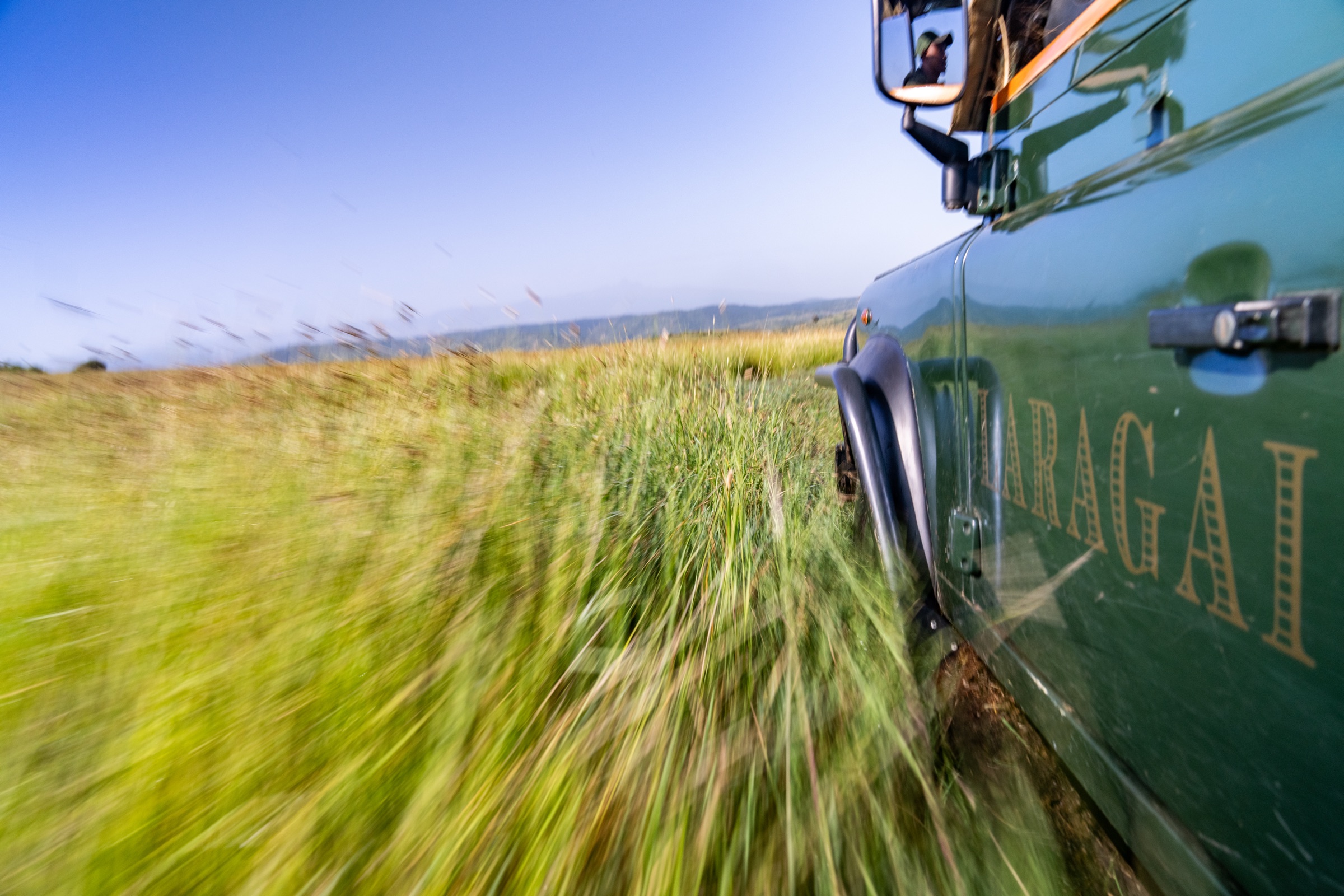
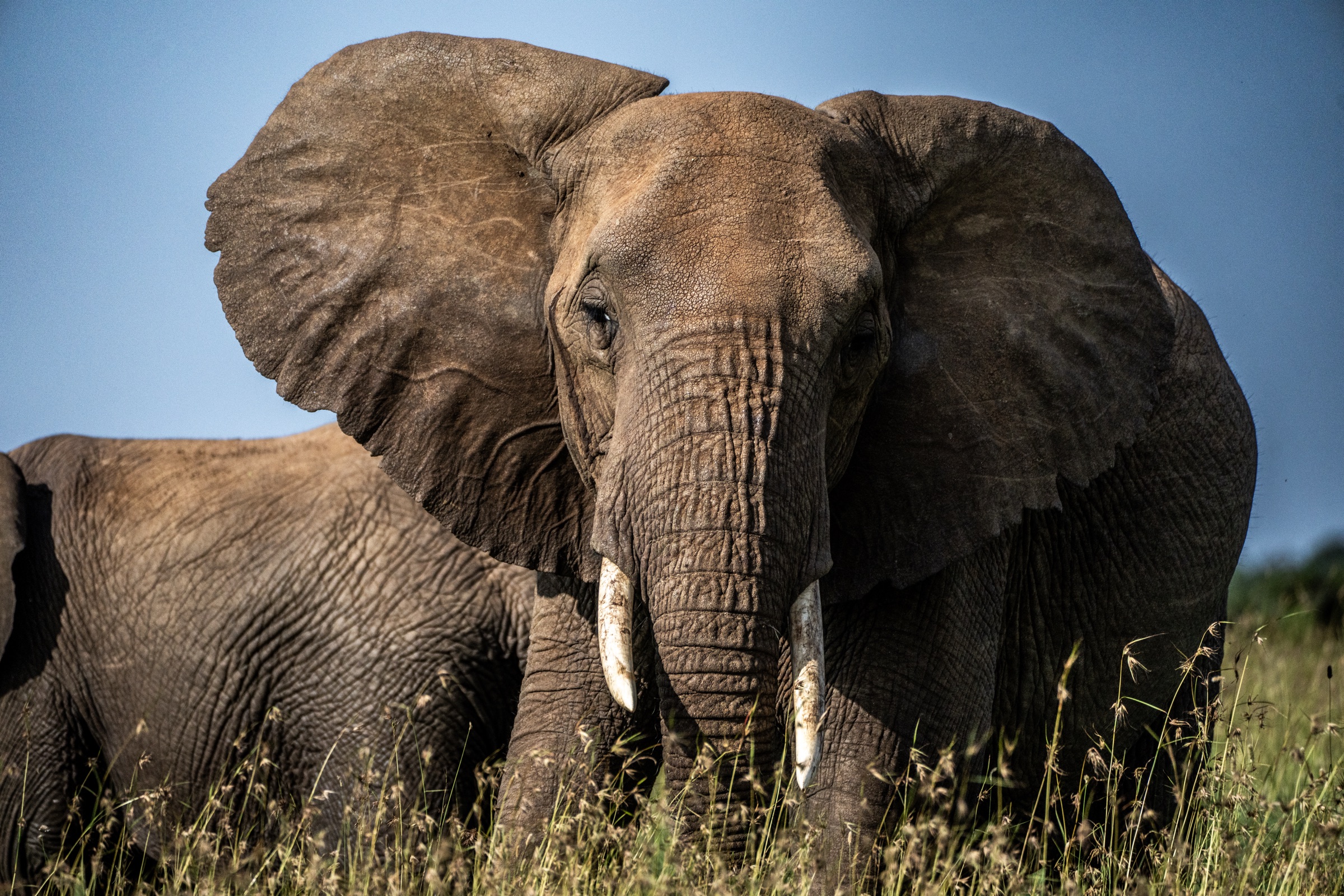
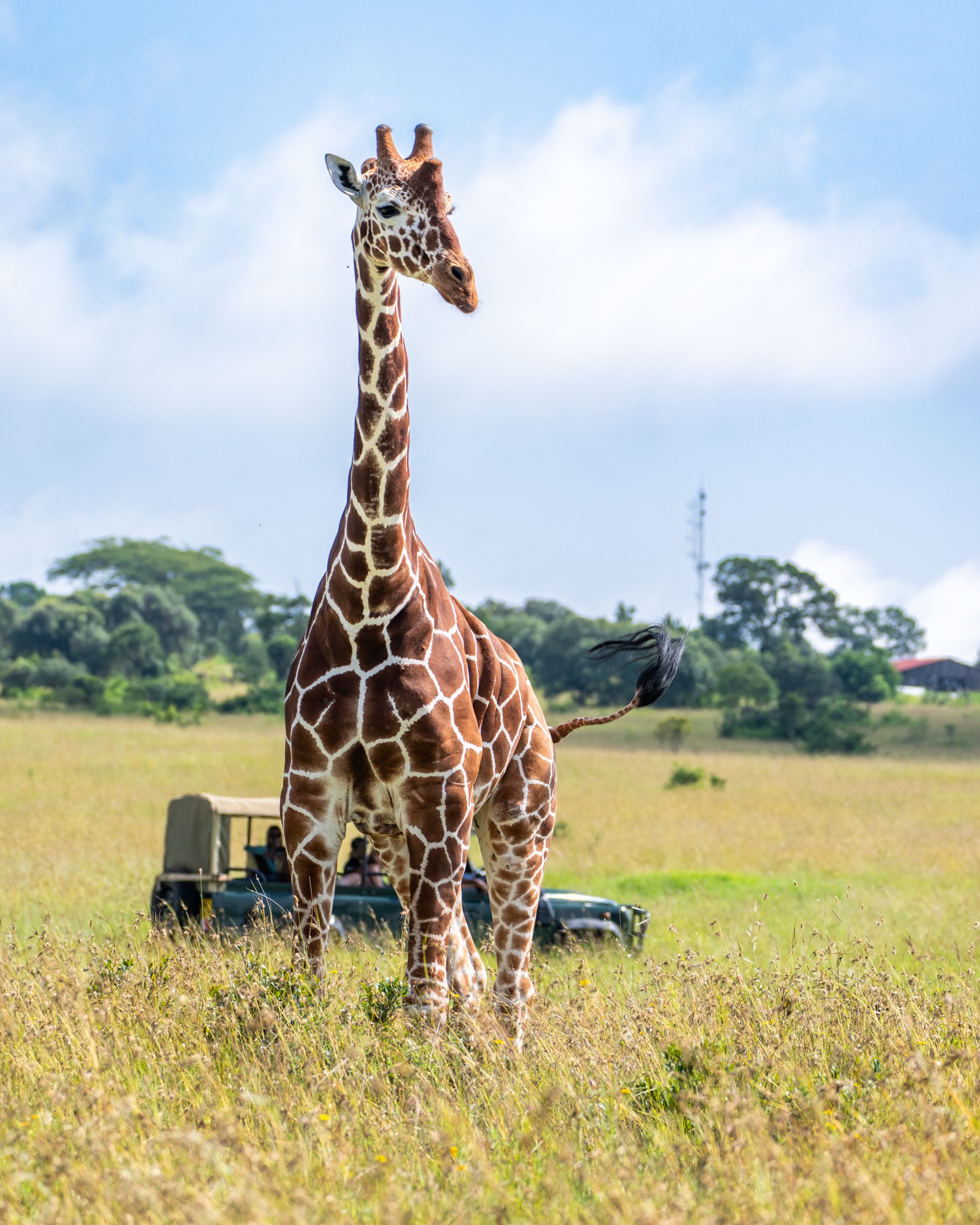
Tone · Place, people, presence · Stein Studios, Kenya 2024
The cast
The cast.
The chorus · guides and locals
Guides, the climbing ranger, porters and camp crew, Orca and the village staff, the farm family, Gaspar. Their own words, in Swahili or English as they choose, subtitled with pride. A large share of the story is carried from their perspective.
Jim Thompson · co-protagonist
Nothing in this film exists without him. Six visits across years, a relationship with the park built one season at a time, and he kept showing up to ask whether a new line could be opened until the park service flew it. He protected the GPS points, then gave them away. He is the want that starts the film and the release that ends it, in both cuts. The risk runs both ways: flattery in one direction, erasure in the other. The film never calls this a rich man's climb.
Benjamin McCullough · the conscience · T1
He explains the system and instructs the camera away from himself, twice. The film obeys him at the level of form. His money self-indictment must appear, in his mouth. Confirm on-camera consent to that specific line.
John · the beating heart · T1 · the target narrator
The only arc that resolves inside the shooting window. The dignity order is load-bearing and always runs: John asked, Orca set the standard, John earned it, Benjamin funded it. Cutting the third step breaks the film's ethics.
Orca · the moral center · the top blocker
The man the park respects, on his wife's ancestral Maasai land, deciding who gets to become a guide. He set John's standard. He is the community-camp payoff, the red-coda location, and possibly the final voice.
Jamal, Captain Abba, the ranger · T2
The inheritor, the minder who wanted the summit and was denied it by altitude, and the ranger who out-climbs the operator on his own mountain. Never put the word "uncorrupted" in the film, on camera or off, and never near Jamal's face.
The Orca blocker
The moral center, the anti-white-savior hinge, the community-camp payoff, the red-coda location, and possibly the narrating voice all rest on Orca. We do not know his real name. "Orca" is likely a nickname. Stein has never met him.
The single highest-value pre-September action is Benjamin's warm introduction to Orca and a verbal on-camera yes. The ceiling of the film is Orca.
The structure
Four movements. Seventeen beats.
Band 16 to 22 minutes. Design center 19:35. The longest beat is the climax, and the longest beat decides the film.
Movement I · The over-leveraged mountain · 4:50 · WANT
The problem the route answers. The antagonist is over-exploitation, never a person and never the state. B0 the red promise and the two clocks. B1 Jim, the deflection. B2 the golden goose and the two pressures. B3 Jim's provocation, "show me the other side." B4 the authoring begins.
Movement II · The authoring · 7:25 · BUILD
The climb reframed as construction. The crew are co-authors, not labor. B5 the insertion. B6 the crew is the film. B7 John, the beating heart, 110s. B8 Jamal, the inheritor. B9 the ice, clock and peak, where the glacier dissolve lands. B10 the training ground.
Movement III · The handoff and the naming · 4:15 · KEEP
B11 is the climax at 150s, the longest beat in the film. The John dissolve, a ranger on the rope, then the naming in Swahili, witnessed and not narrated, held long, no push-in. Then B12 sleeping between the glaciers, and B13 the summit as afterthought.
Movement IV · The rhyme · 3:05 · KEEP
B14 Grumeti, pure image, the model at continental scale. B15 the Rift Valley and Orca's camp. B16 the ending, loss and peace, over the returning red of Lengai. Last sound is the white-necked raven, once, on the empty wind. Then wind. Then black. No music.
The spine in one line: Jim wants it, then Benjamin and Orca and John and Jamal build it, then the rangers and the park and the community keep it, and a Chagga guide tells the whole of it.
Runtime flag
Contract 1.4 buys a 10 to 12 minute film. The master cut is built to 19:35 inside a 16 to 22 band. Either the Legacy sits under contract 1.5 as the extended edit, or 1.4 needs an agreed amendment. Reconcile before delivery.
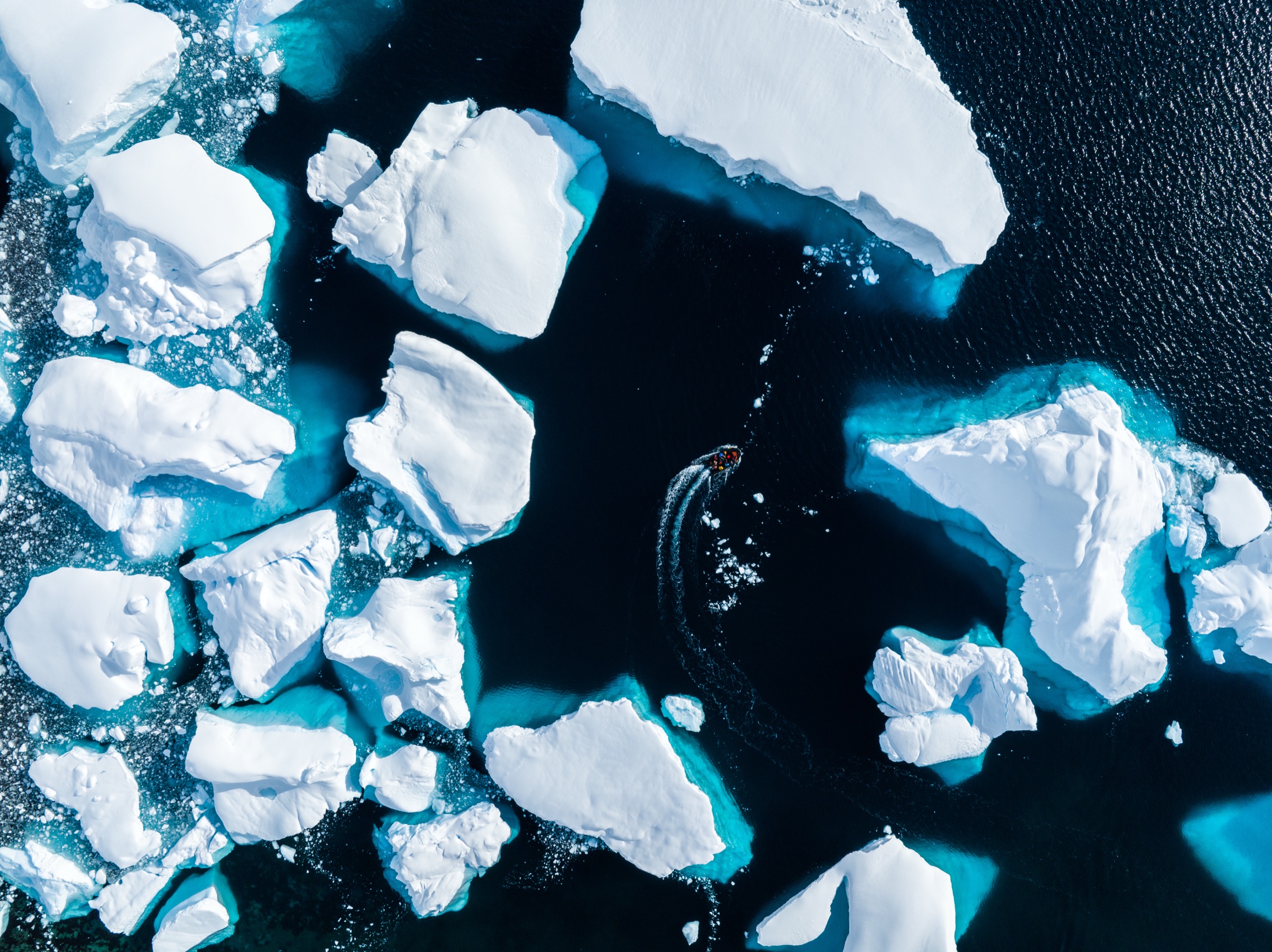
Tonal proxy · Antarctica, Stein Studios archive. Held until the Northern Icefield plates arrive in September.
The two cuts
The two cuts: the private film and the public film.
The Keepsake is not a different film. It is the Master spine minus four advocacy modules plus two private ones. Roughly 60 percent of runtime is common footage, weighted two ways.
The Keepsake · private · the floor
A man who cannot be slowed spends nine days being made still by the last of the tropical ice, and quietly gives away the route he spent years protecting. Adds the interior module and the family module. Ships regardless of the gates.
The Legacy · advocacy · the ceiling
Festival-eligible. Carries the full economic and conservation argument, John's arc, the training ground, the naming at 150s, and the scale rhyme. An option that exercises only when the gates close.
Shoot the Legacy as the A-camera priority and let the Keepsake live inside it. You can always subtract the argument to recover the private cut. You cannot add a naming ceremony or a ranger interview you failed to shoot. When the team splits at the rope-fixing day, follow the rope crew.
P0 capture, non-negotiable. Every plan depends on Jim's voice existing, so it is not optional coverage: his pre-trip sit-down before departure, which is the single highest-risk uncaptured asset in the film; Jim lav'd daily on the mountain; family verite and two sit-downs, subject to Gate 1; four to six guide and local interviews, banked on the recce where possible.
The government receives a Legacy-derived, non-commercial cut. Route, conservation, naming. No family, no interior. Never the raw and never the Keepsake.
Post production
Professional color and sound design.
Benjamin confirmed the anti-action thesis three times, unprompted, having never seen a treatment. That is the license, not a limitation.
The high mountain is shot and graded almost colorless: grey rock, black ash, white ice, blue altitude. That is what it actually looks like up there. Then, in the last minutes, the film shows one shot with real color in it: the lava of Ol Doinyo Lengai glowing red at night, down in the Rift Valley. It is the coolest lava on Earth, near-black by day, red only in the dark. Because the eye has seen almost no color for nineteen minutes, that one red shot lands hard.
The carve-out matters. The withholding applies to the dead zones only: the icefield, the ash, the bare rock. Not to camp, not to faces, not to firelight, not to food, not to golden-hour grassland. The people hold the fire. Do not drain them to feed the red.
A morning overflight will not deliver red. The red frame is archive or a dedicated night capture. Decide before the shoot, not in the grade.
The grammar.
- Locked and slow. Five to ten second minimum holds. Stillness is the default, movement is the exception.
- Natural light only. You do not scout the light, you schedule around it. Golden hour at 3 degrees south is 20 to 25 minutes.
- The bowl motif. Circles within circles. Drone descents spiral into, never fly across.
- Frame emptiness as monumental, never as lack.
- Show the apparatus as skill, never as service.
- No music. Anywhere. Ever. The score is wind, ice, breath, boots, and the crew's real voices.
The raven is the white-necked raven of the heath and moorland, not the summit. Never place a raven call at the summit. Anyone who knows the mountain will hear the lie.
The grade, as a target and not a recipe: desaturated but not dead, cool-neutral shadows, ice held just off pure white, skin honest and slightly warm against the cold world, grain preserved. No teal-orange. The parent is Aman restraint. If a frame could sell a timeshare, kill it.
Before we film
Three things that must be settled before we film.
Not to-do items. Conditions that must close in writing before the relevant material is shot. The Keepsake can proceed. The Legacy exercises only when these close.
Gate 1 · Nomos · Type-1, irreversible
Does "a copy of everything we film" mean raw, or the cleared deliverable? If raw, Jim's family footage, the naming, and the narrator VO could enter a state archive under a promotional license that cannot be clawed back. Shoot no family, interior, or principal material in Tanzania, and do not commingle it with advocacy cards, until this returns in writing.
Gate 2 · The cast-and-recce monkey
Five unconfirmed variables: the western connector goes, John is assigned and guiding, a ranger is on the rope and willing, on-camera consent is secured, and the narrator is cast with the Swahili session arranged. Promise the ceiling to no one, Jim included, until this passes.
Gate 3 · Jim's buy-in
The Legacy uses Jim's money, his mountain, and his archive to make a film that foregrounds Tanzanians, repositions him from hero to catalyst, and gives the narrating voice to a Tanzanian. Get his explicit yes to the split, the decentering, and the narration, alongside the "tell me about Jamie and Matty" conversation, before the shoot.
Still open
Open questions.
With Jim
Who are Jamie and Matty, blood or company. The multi-year archive drive, catalogued by year, before September. Shoot dates. Buy-in per Gate 3. Footage rights, routed to Nomos first.
With Benjamin
Did the western connector go, or is it a Machame start. Is John assigned with on-camera consent. Are Abba, Jamal, and the ranger secured. The introduction to Orca. Can John carry the register. Glacier-sleep permit. The genesis guide's real name, which is currently a garbled transcription and must not be locked.
Verify before asserting on camera
The "highest salaries" claim against KPAP benchmarks. The anti-poaching-through-employment causal claim. Any glacier causal line, which needs a named glaciologist. The Ash Pit and Lengai dates. Jim's glacier witness quote, which needs clearance.
The bottom line
The Keepsake is the floor and ships today. It honors the contract. The Legacy is the ceiling and must be earned.
The ceiling no longer rests on one fragile beat. Four members carry it, and the deepest is a Tanzanian telling the whole of it in his own words. The dependency is the September cast.
Point the camera at the crew. Name every face. Give them the words, not just the voice. Hold the money honestly. Let the naming be real or not at all.
Never let the state, the savior reflex, a manufactured ending, or a written script decide what is true. Frame the whole film, internally, as a bequest, not a conquest.
Someone had to want it. Someone had to open it. Everyone gets to keep it. And the mountain's own people tell it.